If you’re running a small or medium-sized business right now, innovation might feel like just another thing you’re supposed to be doing on top of everything else.
You’re already juggling cashflow, customers, marketing, systems, staff, and your own energy. You’re being told to “use AI”, “think differently”, “future-proof the business”, while quietly wondering when you’re meant to find the time, headspace, or certainty to do any of that properly.
From where we sit at Broxbourne Enterprise Centres, this tension is visible every day…new tech is getting faster and louder in the marketplace, but the age old challenges of market fit and growth haven’t disappeared.
Across our two centres we work alongside founders and business owners who are not short of ideas, ambition, or effort, but who are trying to make smart decisions in a fast-moving, often noisy landscape.
That’s why innovation in 2026 needs a reset.
For SMEs, innovation is not about chasing trends, adopting every new tool, or reinventing your business overnight. It’s about making deliberate, human-centred choices that help you stay relevant, resilient, and commercially viable.
Seen through that lens, SMEs are not behind the curve. In fact, they are uniquely placed to lead. From our vantage point inside a thriving enterprise centre, here are the innovation trends we’re seeing emerge in 2026, grounded not in theory, but in what’s actually working for businesses like yours.
1. Innovation Starts With People, Not Tech
We see too many business leaders chase shiny tools and forget the human core of innovation. In 2026, the tightest competitive edge for SMEs is understanding user needs better than anyone:
• Empathy-first research: SMEs that thrive are doing micro-validation with customers daily, not quarterly surveys. We’ve watched a small consultancy refine its offerings simply by hosting 15-minute “feedback coffee calls” with clients. The insights were gold.
• Internal innovation culture: You don’t need a science lab. You need curiosity. Encouraging every employee to ask “what if?” creates a flow of ideas that lead to better products and services.
Companies like Good Things Clinic, CH Travel and charities like CHEXS, HABS and The Golf Foundation are fine examples of this.
2. Hybrid Human + AI Collaboration Is the New Baseline
AI isn’t replacing people—thoughtful integration of AI tools is transforming how SMEs innovate.
• AI for idea generation: Smart prompt crafting (the kind I build into my frameworks) lets teams expand concept horizons without draining hours.
• AI for rapid prototyping: From draft proposals to concept visuals, AI is shortening cycles and freeing up creative energy for strategy and human judgement.
• Guardrails matter: Ethical and quality checks ensure AI is a co-pilot, not autopilot.
SMEs who embrace hybrid workflows are not only faster—they’re also more creative and adaptive. Quinyo, Website Group and Ovia all tech companies based at BEC will concur with this for sure.
3. Modular Products and Services Win More Buyers
Customers today want flexibility. The era of one-size-fits-all products is over.
• Product modularisation: Breaking offerings into bite-sized components lets customers build their own solutions, boosting engagement and revenue.
• Subscription ecosystems: Even traditional services can thrive with membership models that mix education, community, and premium access.
Great examples of this at BEC include Vow Nutrition, Electric Car Company and ENDesigns.
4. Sustainable Innovation Isn’t Optional…It’s Expected
ESG and sustainability have moved beyond compliance into competitive advantage. SMEs that weave environmental and social value into their innovation strategies benefit in two ways:
• Greater customer affinity: Buyers increasingly choose brands aligned with their values.
• Cost reduction: Eco-efficient practices often reduce waste and operating costs.
Sustainable innovation is less about greenwashing and more about concrete, measurable impact. Companies at our centres like IPG and EHH know this all too well.
5. Open Innovation and SME Collaboration Ecosystems
Innovation used to be internal; now it’s collaborative. SMEs that plug into shared ecosystems, whether with local partners, industry networks, or cross-sector coalitions, access ideas and capabilities they couldn’t build alone.
• Shared IP and co-creation: Joint ventures and shared innovation labs are becoming practical for SMEs.
• Community-powered testing: Real user groups provide early, low-cost validation.
Nat Gee Productions, My Elements, Love Life Radio…are all at the heart of the vibrant community at BEC where collaboration happens by design not by luck.
3 Ways to get involved in our work in 2026
• Join one of our LAB sessions come and take part in one of our FREE or low cost workshops, find out what’s going on via Eventbrite
• Come hang out in our Co-Working Spaces or Cafe you don’t have to be a fulltime customer with us to enjoy our dynamic spaces and great coffee
• Access The Wire our customers get access to a private network of more than 1000 founders and business owners from across the UK and Ireland for collaboration and support
If reading this has sparked something in you and you’d like to explore basing yourself here in 2026, now is the perfect moment.
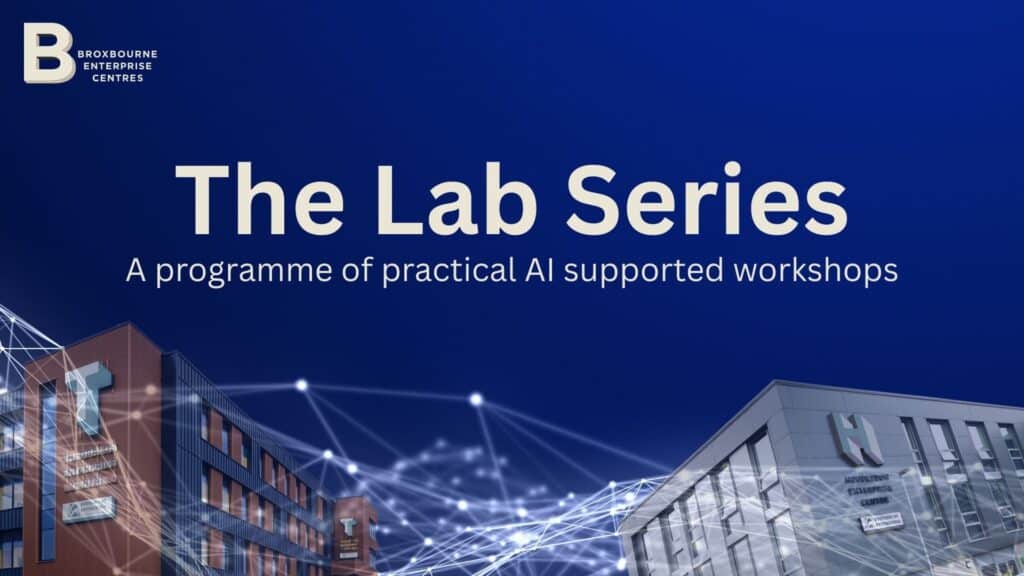
Why not register for one of our Lab Series workshops and get a feel for the place, led by our Innovation Director Julie Creffield who delivers all of the inhouse business support to our customers.
Book a tour, come and see the spaces, meet the team and get a feel for what could be your new home for growth. Act quickly and we may be able to get you through the doors as early as the 5th of January 2026.